What to Wear in Mozambique
I wanted to write a little bit here about teaching by about now, because classes just started two weeks ago, but Mozambique has taught me once again that assuming things are going to go the same way as they do in America is always a bad bet to make. Classes officially started a couple weeks ago, on Tuesday the 4th, but students were still registering, and teachers were still trickling in from their vacations, so when I showed up at 7 for my first class absolutely nobody was there, no administrators, no students, nobody. Later that day the school directors showed up, but only to sign kids up for classes. I tried to go to a later class, but the classroom door was locked, so I just called it a day and went home. And that’s about how the first week went. Even still after the second week is ending, there’s still a sense that classes are about to start for real in a couple of weeks, but for now it’s too early to do any real teaching. A girl that lives next door to came up to me just the other day and was excited to tell me that I was her physics teacher, and I was so confused because at that point I’d already taught her class twice and she wasn’t there. So I’ll probably post about school at some point, but I think I’ll take a page out of the Mozambican way to do these things and put that off a few more weeks.
So instead of a school post I thought I’d write a bit about one of the most fun aspects of Mozambican culture to explore into as a foreigner, their clothing. Strolling through the little pop-up market that comes to town every Saturday, between the booths selling salty dry fish and straw mats, easily the most eye catching little reed stalls are the ones selling distinctive local fabrics called capulanas. Capulanas are a kind of waxy fabric that’s a bit stiffer than cotton that is used for just about everything. Usually they have bright colors and really fun patterns, but also I’ve seen capulanas with funny designs like a big picture of the president Felipe Nyusi or the pope, political logos, maps of the country, elephants, and peacocks (I don’t think there are even peacocks in Mozambique, but hey, throw it on a fabric and I guarantee a Mozambican mãe will wear it).
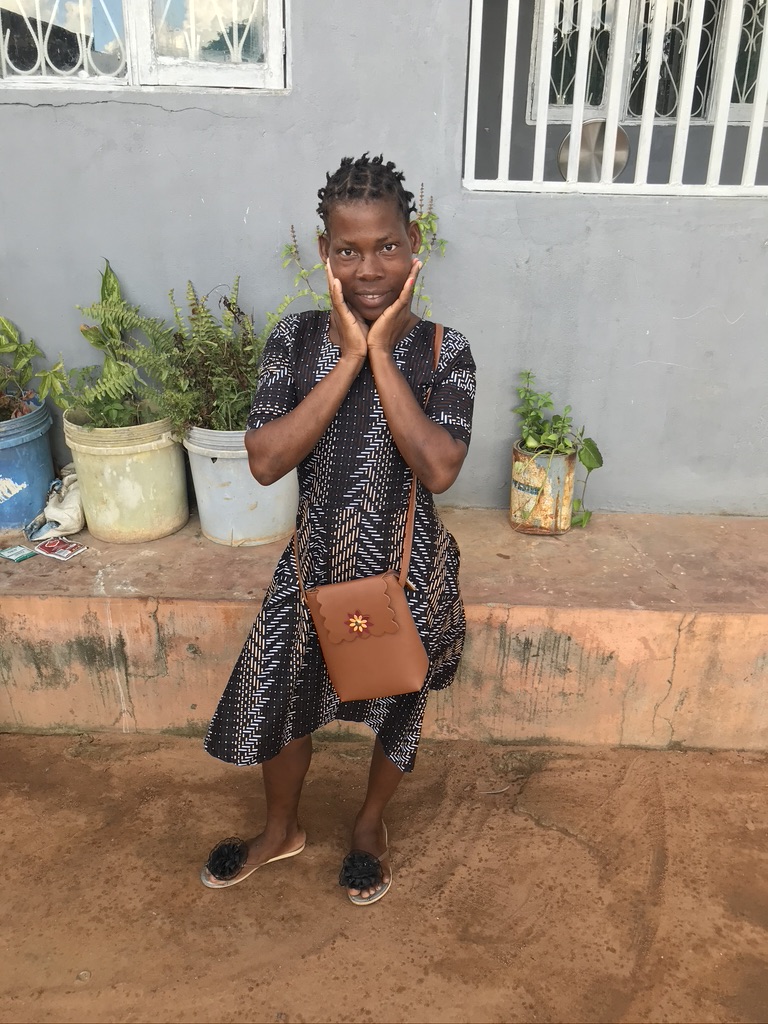
For women, probably the most common outfit is a t-shirt, and some sort of shorts or leggings, with a capulana tied over that. I asked my next door neighbor to help me show a little of what somebody would wear in Mozambique, so we both brought out our best capulanas and had a bit of a photo shoot.
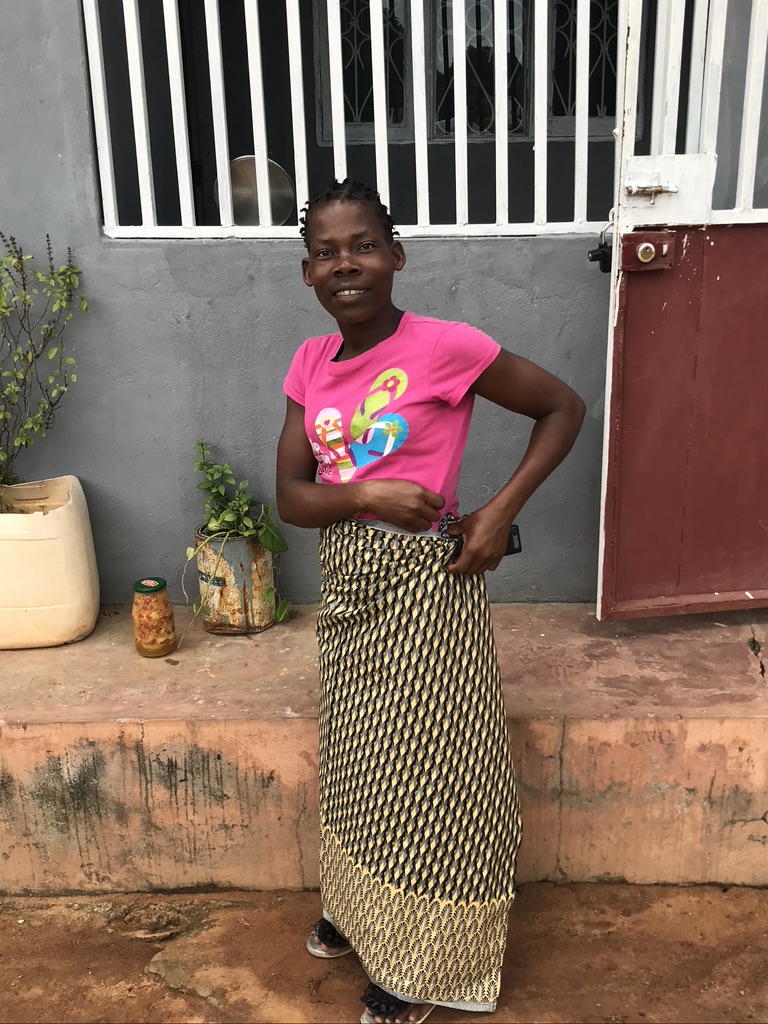
Women can also throw a small capulana over their heads while your cooking as a little hair net, or if you’re carrying a baby, you can sling it around your back, over one shoulder, and under the other arm, kinda like if you mixed a baby bjorn and kavu bag, and cut the price of either by like 50 times.
It’s also super common to get stuff tailored out of capulana. I’ve seen jackets, skirts, dresses, hats, backpacks, but I know especially volunteers have gotten really creative with their capulana fashion. I know a volunteer who got a bomber jacket, and I’ve heard of people asking modistas (tailors), to line their shoes in capulana. I even heard a volunteer managed to explain what a hammock was to a modista for slinging up in her house. You just have to know before you get anything tailored, that whenever you get something out of capulana, unless you search for the most boring capulana, nothing made out of the fabric will ever be very subtle.
For men, there aren’t quite as many options, and it’s not quite as common to see men in capulana, but it definitely isn’t something exclusive to women, there’s just a bit of a culture of machismo here, so similar to back in the US, but probably to a little bit more so, it’s seen as somewhat feminine to care too much about what you’re wearing. Either way it’s not abnormal for a guy to throw on a capulana shirt, and there are a bunch of different styles.
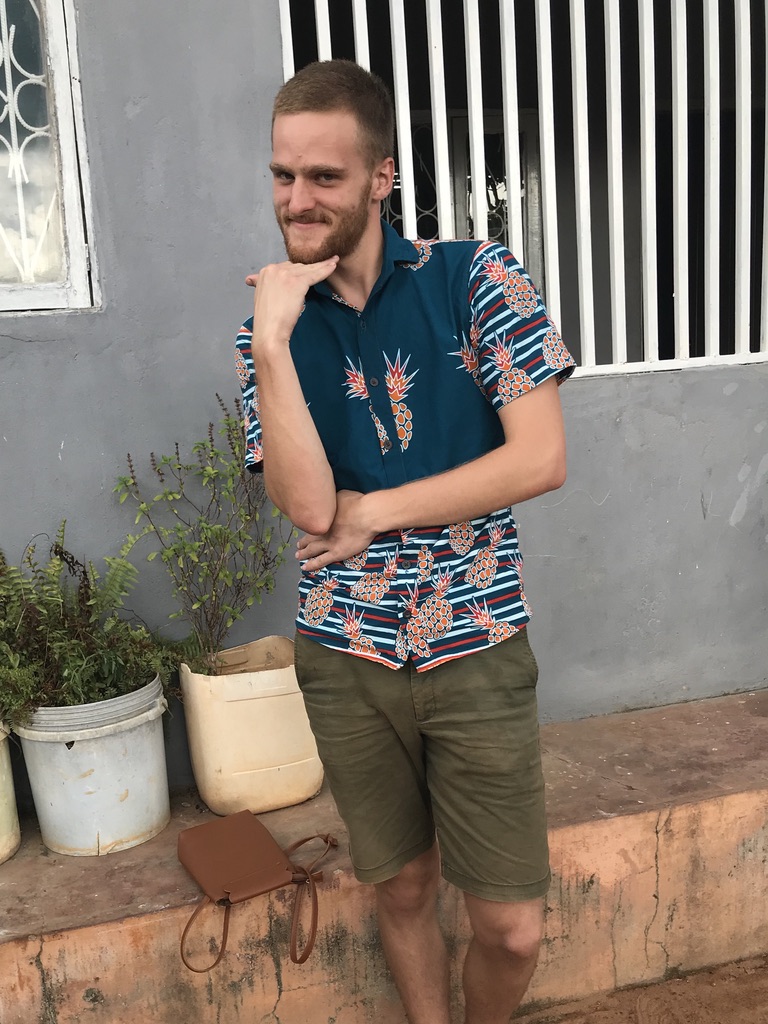
The most common is the short sleeve button down (long sleeves take two fabrics so most capulana shirts are short sleeve to save money, also it’s damn hot).
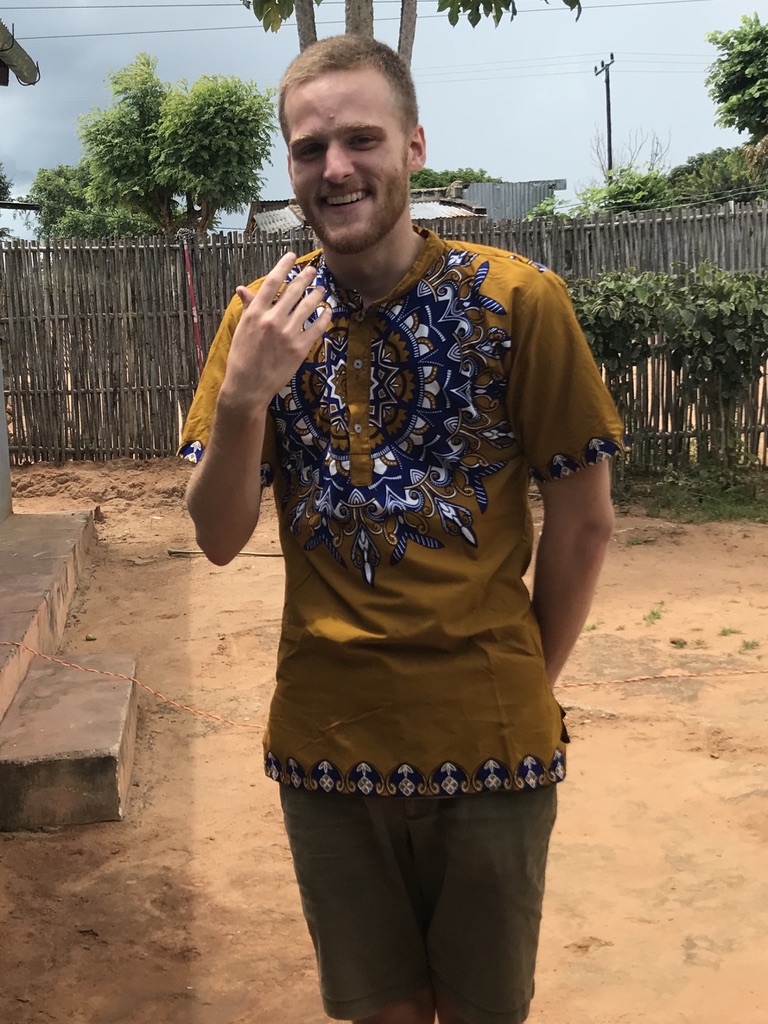
I’m a big fan of button ups or quarter buttons with a gola chinesa (it translates to chinese collar, but this is one of the words that they say here that sound 100% more racist when I translate it to English, so I’m gonna stick with gola chinesa).
One of my favorite things about mozambican culture and their fashion is how during special events like marriages or graduations, it’s super common for a whole bunch of people, sometimes the whole neighborhood, or everybody at a ceremony, to all get matching capulanas. Even just as a gift it’s seen as a little bit more touching to give somebody a capulana and also buy yourself the same one, or to get two friends the same capulana. During our swearing in ceremony with the peace corps we tried to embrace that vibe and all 53 of us got the same capulana tailored up.
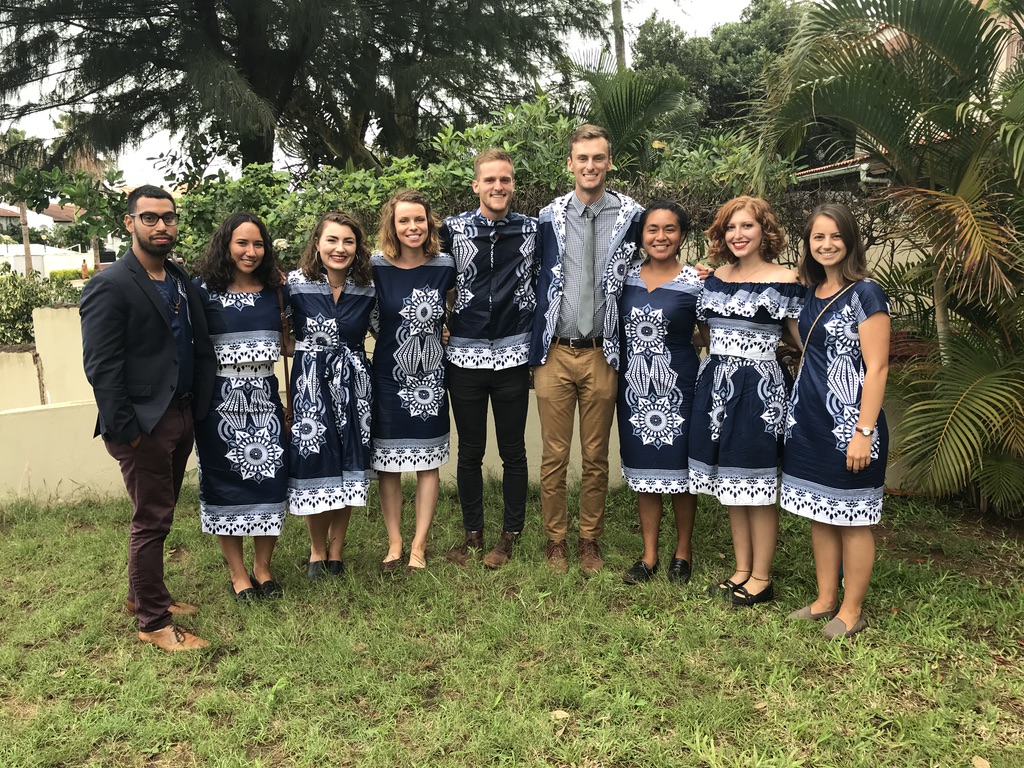
While capulanas are super common, the most common way to get clothes here is by picking up what y’all back home just passed on at goodwill a few weeks ago. Donated clothing, after getting picked through in the US and Australia and such, gets shipped here and bought for pennies on the pound. It’s a lot cheaper than getting anything tailored, so it’s everywhere. US aid organizations often actually do that with clothes and food and a stuff like that, which is a bit of a double edged sword, cus cheap clothing is very needed, but economically it really stunts local growth into these sectors. Whatever the ethics of it are, it leads to some incredibly funny situations with people wearing clothing with English that they can’t understand. Maybe my favorite one I’ve seen is probably a lady who was just a little bit on the large side wearing a shirt that said “I’m extremely pregnant”. She wasn’t pregnant.
 Richard Newsome - Peace Corps Mozambique
Looking good, Richard! Diggin the camisas de capulana! ❤️
LikeLike