Welcome to Moz
Four months ago my cohort of fifty-something Americans and I took a long flight from JFK to Johannesburg, then from there to Maputo, the capital of Mozambique, until finally we arrived in a little town up in the mountains outside Maputo, where at least most of us went from speaking no Portuguese at all, never having taught a high school class before, and having a tiny stomach that couldn’t fit half as much food as a Mozambican mãe will try to feed you, to the bright young group of expats we are today. As of two weeks ago, after the end of training, we’ve all been dropped in our towns scattered across the country with the expectation that come February when the school year starts, we’ll all be a competent bunch of high school English and Science teachers.
My site is a tiny little truck stop of a town in northern Zambézia, a province in north-central Mozambique. The one thing that all the volunteers in PC Moz 32 know about my one horse town is that it’s the one site out of all the 53 of us that isn’t connected to the electrical grid. For charging my computer and phone and everything like that I have a solar panel along with a big heavy car battery I can charge up. Which also has given me the reputation in town of the guy who can carregar telefones so every mãe, pai, and criança in Mozambique it seems like has been knocking at my door with cellphone and a micro-usb cable in hand. The first week I arrived at site, since my house doesn’t have a lamp or lightbulb to its name, I just sat in darkness and accepted that it was time to go to bed at 8 PM, though a week or so ago I bought a couple lanterns which can light a whole room, and they’re doing the job just fine once the sun goes down.
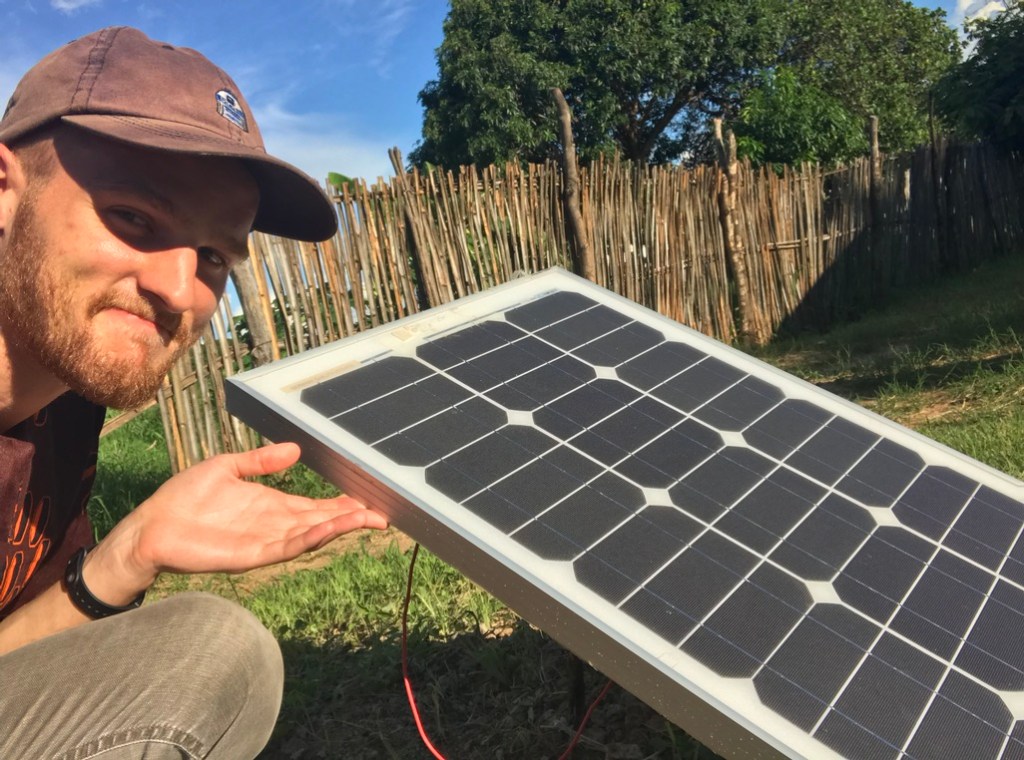
Running water is also one of those things I only get to enjoy in my strange mefloquine dreams. But that’s much more of the reality of living in Mozambique than bad luck on my part, very few volunteers have that luxury. All that means practically is that I hire somebody to go to the well with a couple buckets a day, which I use for everything from cooking, to bathing, to flushing the toilet. Drinking water just involves boiling, then filtering water in my big filter that the medical office here provided.
The two big things I can’t enjoy that most volunteers can shell out the money for are a refrigerator and an electric stove. For the former that means I can’t keep things for very long after I make them, and when I do eat leftovers I have to heat them up again to a boil to kill all the little Mozambican bacteria trying to ruin my stomach, my day, and my dump-flush toilet. The later means that I’m relying on my little charcoal fogão to do all my cooking. Most of the locals here light charcoal by lighting plastic bags on fire then dripping the molten plastic that looks like the evil black goo from Ferngully onto the coals, but for the pulmonary health of me and all the birds flying overhead I opt for the method of lighting a little fire with sticks and paper under the coals. All of this, after you learn to get it lit without putting it out with your tears of frustration, starts to becomes second nature.
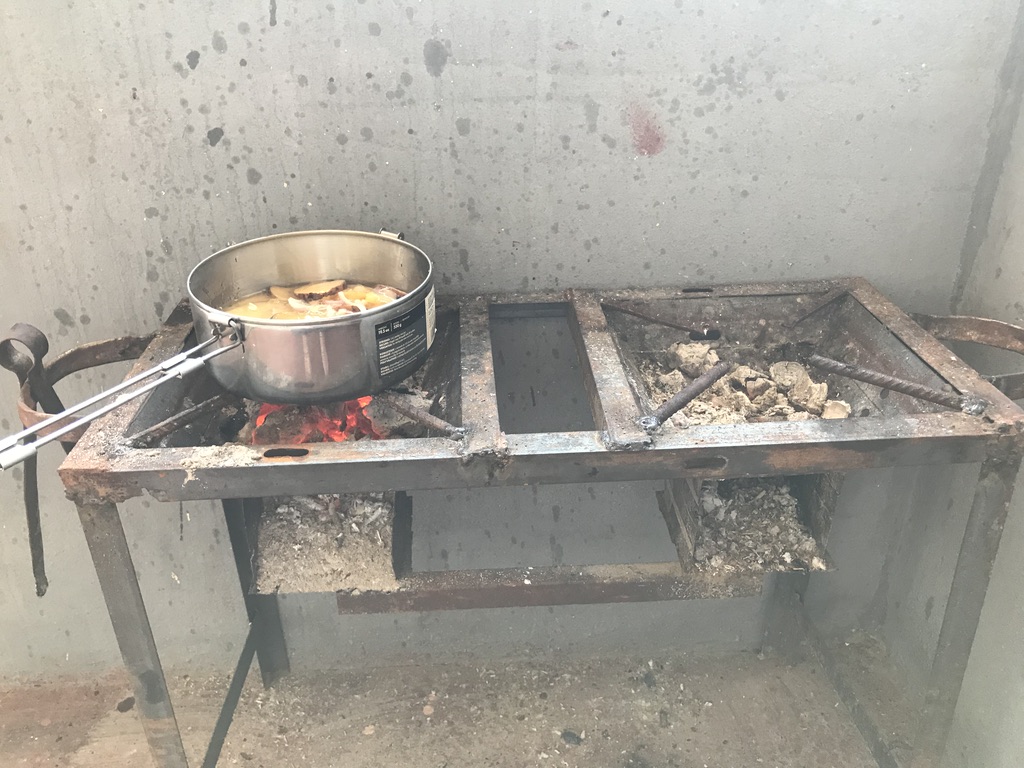
My diet is a lot of sautéed veggies and rice, omelettes, pasta, stews, and usually a couple fresh mangoes for breakfast. My favorite Mozambican dish though is matapa, a cassava leaf dish cooked in a peanut and coconut curry. Just doing a bit of research about this I learned that the name for the dish is derived from the Kingdom of Mutapa which ruled in Southern Africa in the 15th to 18th centuries, so there’s a fun tidbit. Feel free to cook along at home!
Matapa
For the Matapa:
– 1 cup of cassava leaves, ground with 4 cloves of garlic – Coconut milk from 2 coconuts or 1L of store-bought coconut milk (coconut milk and coconut water aren’t the same thing) – 2 cups of peanut flour – 1 onion and 2 tomatoes ground in a mortar
For the Coconut Milk:
– 2 coconuts, shaved – 750 ml of lukewarm water
1. Put the cassava leaves and garlic in a pot with water and cook it until the water has disappeared completely
2. Make the coconut milk: shave the coconuts, or use pre-shaved coconut. Soak the coconut shavings in 250 ml of lukewarm water and with both hands squeeze the coconut with the water for a few seconds to get as much out of the coconut shavings as possible. Strain with a fine strainer into another pot. Go back and add 500ml more of lukewarm water to the shaved coconut. Repeat the process and strain the mixture. (Some times people choose to use add the ‘first milk’ from the first 250 ml to the matapa after the second milk has been cooking for a bit, to maintain more of the sweetness from the coconut instead of joining it all together, but the recipe I’m translating doesn’t do this, so do what you want).
3. Make the peanut and coconut curry (they call it curry, but it’s not what you think of as curry): Take some of the coconut milk from the other pot (about 1/3 of it) and add it to the peanut flour slowly, stirring well to dilute. Strain into the other coconut milk and stir. Take the leftover peanut flour and put it back in the first pot, adding water this time (about 250 ml) and stir again to continue to dilute the peanut flour. Strain this again into the coconut milk. You can strain the peanut flour one more time with the same amount of water, or not. The objective of this process is to not leave the dish very dense with peanut flour (just for the record I don’t think I’ve ever seen a mozambican do all this, you should be able to just cook the coconut milk with the peanut flour, but hey, I’m just translating what they wrote). Finally stir the coconut milk and peanut mixture well, and add the tomato and onion, then bring it to a boil over medium heat, always mixing.
4. Add the cassava and garlic to the mixture and again cook it over medium heat, always mixing. The matapa with thicken and develop a texture. This process will take about 1 to 2 hours. The matapa can have a more creamy or more liquid consistency, depending on how you choose to prepare it.
*Translated from receitaparatudo.com, muito obrigado!
Typically matapa’s served with xima, a starchy base made from corn flour, resembling grits, just a bit thicker and less… well, gritty. It’s super common to eat it with plain white rice though if you want to give it a try. The same curry also works well with lots of other types of leafy greens, they make it often with kale if you can’t find cassava leaves.
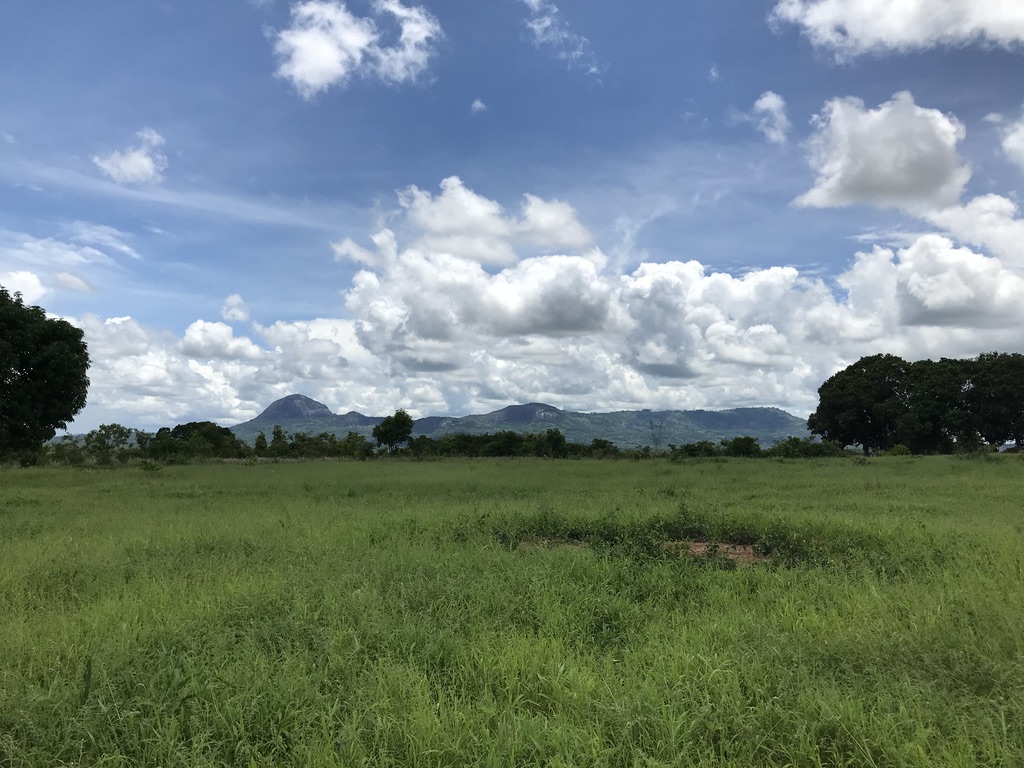
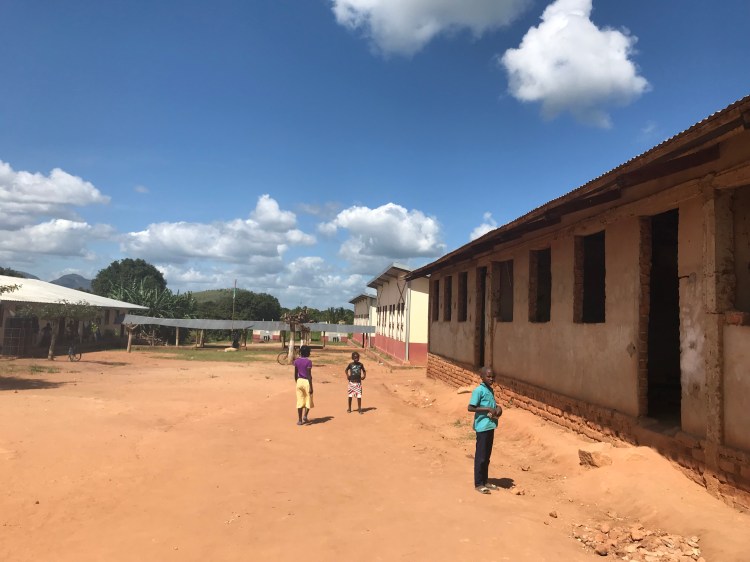
The other thing that’s beautiful about my little town is that it’s situated right at the tail end of the Great Rift Valley mountain system that runs all the way down the east coast of the African continent. If you’ve seen pictures of Killiminjaro, you know it looks kinda weird how it’s surrounded by a lot of flat ground and it just kind of pops up out of the nothing. I’m no geologist, or geographer, or mountainologist, but that’s a lot of what it looks like down here too, a very flat landscape with just a couple random pimples of mountains and small mountain ranges all around, each probably ten or so miles from the next closest blemish. So far, all the locals here have just laughed at me asking about hiking the mountains in the area, but even still there’s a keen sense of mountain charm to just having them poking up around the horizon. The high school I’ll be teaching at has the most beautiful view of the range of mountains just south of town, I can see myself spending a few days staying after class just to sling my hammock up and read.
 Richard Newsome - Peace Corps Mozambique