Featured

Welcome to Moz

Welcome to Moz

Four months ago my cohort of fifty-something Americans and I took a long flight from JFK to Johannesburg, then from there to Maputo, the capital of Mozambique, until finally we arrived in a little town up in the mountains outside Maputo, where at least most of us went from speaking no Portuguese at all, never having taught a high school class before, and having a tiny stomach that couldn’t fit half as much food as a Mozambican mãe will try to feed you, to the bright young group of expats we are today. As of two weeks ago, after the end of training, we’ve all been dropped in our towns scattered across the country with the expectation that come February when the school year starts, we’ll all be a competent bunch of high school English and Science teachers.

My site is a tiny little truck stop of a town in northern Zambézia, a province in north-central Mozambique. The one thing that all the volunteers in PC Moz 32 know about my one horse town is that it’s the one site out of all the 53 of us that isn’t connected to the electrical grid. For charging my computer and phone and everything like that I have a solar panel along with a big heavy car battery I can charge up. Which also has given me the reputation in town of the guy who can carregar telefones so every mãe, pai, and criança in Mozambique it seems like has been knocking at my door with cellphone and a micro-usb cable in hand. The first week I arrived at site, since my house doesn’t have a lamp or lightbulb to its name, I just sat in darkness and accepted that it was time to go to bed at 8 PM, though a week or so ago I bought a couple lanterns which can light a whole room, and they’re doing the job just fine once the sun goes down. 
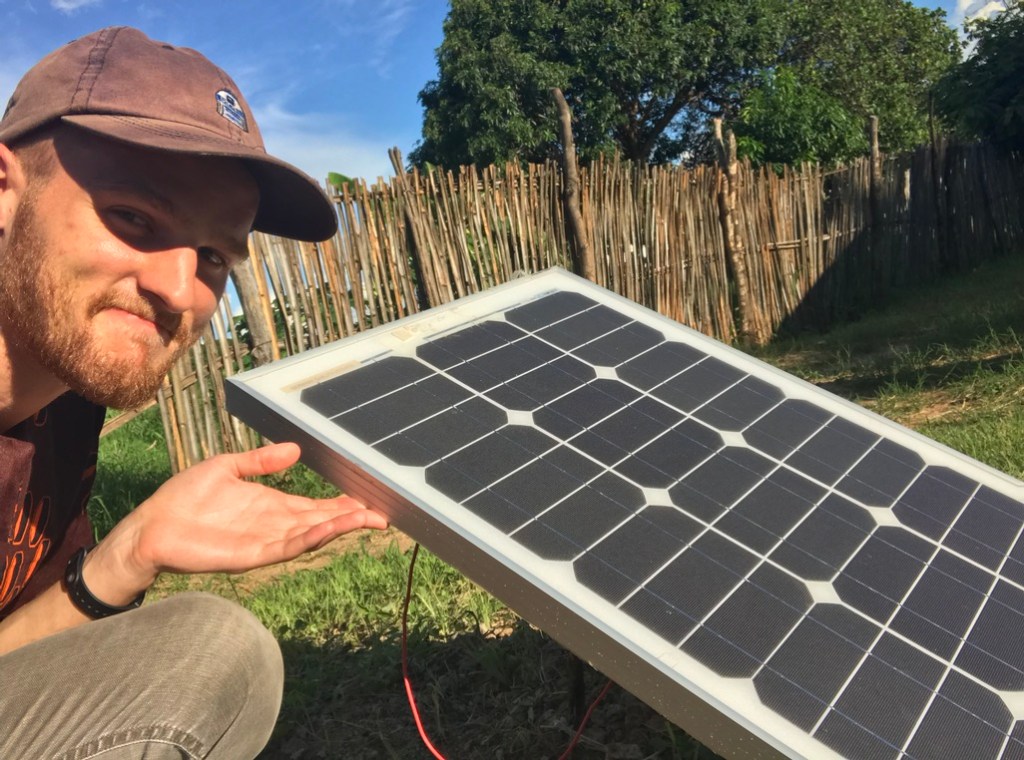
Me and my solar panel soaking up the rays

Running water is also one of those things I only get to enjoy in my strange mefloquine dreams. But that’s much more of the reality of living in Mozambique than bad luck on my part, very few volunteers have that luxury. All that means practically is that I hire somebody to go to the well with a couple buckets a day, which I use for everything from cooking, to bathing, to flushing the toilet. Drinking water just involves boiling, then filtering water in my big filter that the medical office here provided. 

The two big things I can’t enjoy that most volunteers can shell out the money for are a refrigerator and an electric stove. For the former that means I can’t keep things for very long after I make them, and when I do eat leftovers I have to heat them up again to a boil to kill all the little Mozambican bacteria trying to ruin my stomach, my day, and my dump-flush toilet. The later means that I’m relying on my little charcoal fogão to do all my cooking. Most of the locals here light charcoal by lighting plastic bags on fire then dripping the molten plastic that looks like the evil black goo from Ferngully onto the coals, but for the pulmonary health of me and all the birds flying overhead I opt for the method of lighting a little fire with sticks and paper under the coals. All of this, after you learn to get it lit without putting it out with your tears of frustration, starts to becomes second nature. 
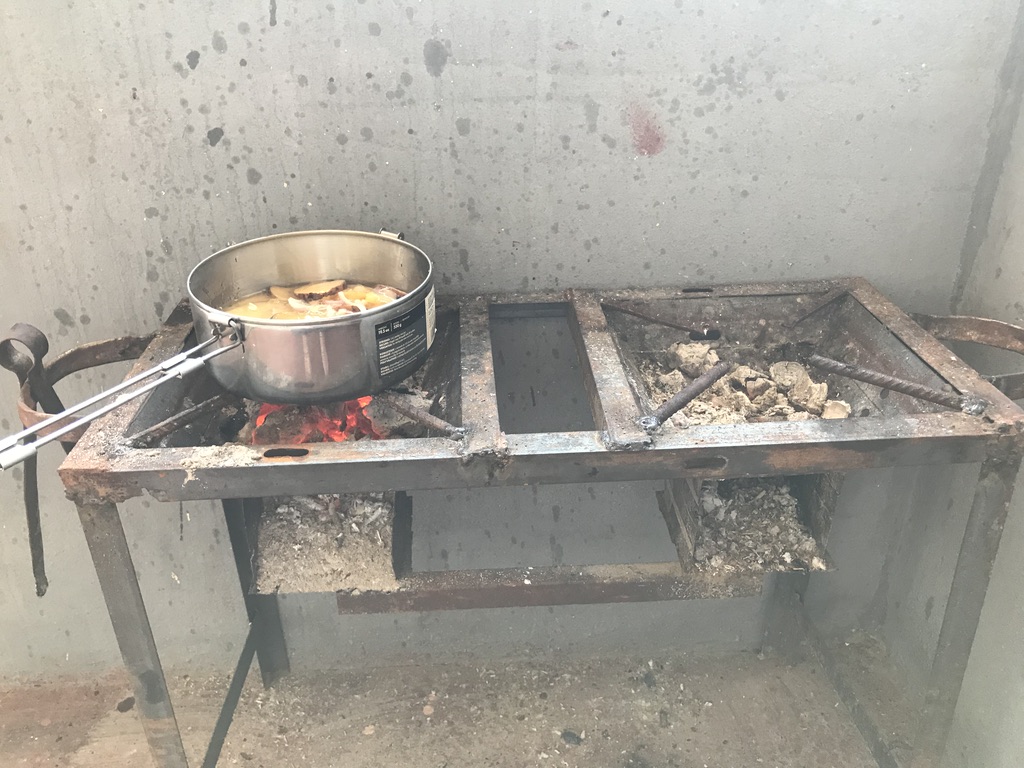
My lil’ fogão, cooking up my failed attempt at a Spanish Tortilla

My diet is a lot of sautéed veggies and rice, omelettes, pasta, stews, and usually a couple fresh mangoes for breakfast. My favorite Mozambican dish though is matapa, a cassava leaf dish cooked in a peanut and coconut curry. Just doing a bit of research about this I learned that the name for the dish is derived from the Kingdom of Mutapa which ruled in Southern Africa in the 15th to 18th centuries, so there’s a fun tidbit. Feel free to cook along at home! 

Matapa

For the Matapa:

– 1 cup of cassava leaves, ground with 4 cloves of garlic – Coconut milk from 2 coconuts or 1L of store-bought coconut milk (coconut milk and coconut water aren’t the same thing) – 2 cups of peanut flour – 1 onion and 2 tomatoes ground in a mortar

For the Coconut Milk:

– 2 coconuts, shaved – 750 ml of lukewarm water

1. Put the cassava leaves and garlic in a pot with water and cook it until the water has disappeared completely

2. Make the coconut milk: shave the coconuts, or use pre-shaved coconut. Soak the coconut shavings in 250 ml of lukewarm water and with both hands squeeze the coconut with the water for a few seconds to get as much out of the coconut shavings as possible. Strain with a fine strainer into another pot. Go back and add 500ml more of lukewarm water to the shaved coconut. Repeat the process and strain the mixture. (Some times people choose to use add the ‘first milk’ from the first 250 ml to the matapa after the second milk has been cooking for a bit, to maintain more of the sweetness from the coconut instead of joining it all together, but the recipe I’m translating doesn’t do this, so do what you want).

3. Make the peanut and coconut curry (they call it curry, but it’s not what you think of as curry): Take some of the coconut milk from the other pot (about 1/3 of it) and add it to the peanut flour slowly, stirring well to dilute. Strain into the other coconut milk and stir. Take the leftover peanut flour and put it back in the first pot, adding water this time (about 250 ml) and stir again to continue to dilute the peanut flour. Strain this again into the coconut milk. You can strain the peanut flour one more time with the same amount of water, or not. The objective of this process is to not leave the dish very dense with peanut flour (just for the record I don’t think I’ve ever seen a mozambican do all this, you should be able to just cook the coconut milk with the peanut flour, but hey, I’m just translating what they wrote). Finally stir the coconut milk and peanut mixture well, and add the tomato and onion, then bring it to a boil over medium heat, always mixing.

4. Add the cassava and garlic to the mixture and again cook it over medium heat, always mixing. The matapa with thicken and develop a texture. This process will take about 1 to 2 hours. The matapa can have a more creamy or more liquid consistency, depending on how you choose to prepare it.

*Translated from receitaparatudo.com, muito obrigado!

Typically matapa’s served with xima, a starchy base made from corn flour, resembling grits, just a bit thicker and less… well, gritty. It’s super common to eat it with plain white rice though if you want to give it a try. The same curry also works well with lots of other types of leafy greens, they make it often with kale if you can’t find cassava leaves. 

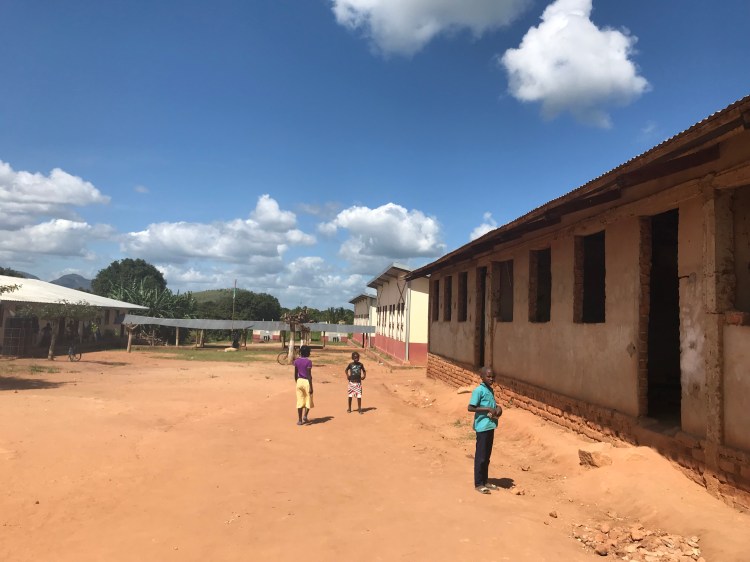
The other thing that’s beautiful about my little town is that it’s situated right at the tail end of the Great Rift Valley mountain system that runs all the way down the east coast of the African continent. If you’ve seen pictures of Killiminjaro, you know it looks kinda weird how it’s surrounded by a lot of flat ground and it just kind of pops up out of the nothing. I’m no geologist, or geographer, or mountainologist, but that’s a lot of what it looks like down here too, a very flat landscape with just a couple random pimples of mountains and small mountain ranges all around, each probably ten or so miles from the next closest blemish. So far, all the locals here have just laughed at me asking about hiking the mountains in the area, but even still there’s a keen sense of mountain charm to just having them poking up around the horizon. The high school I’ll be teaching at has the most beautiful view of the range of mountains just south of town, I can see myself spending a few days staying after class just to sling my hammock up and read.
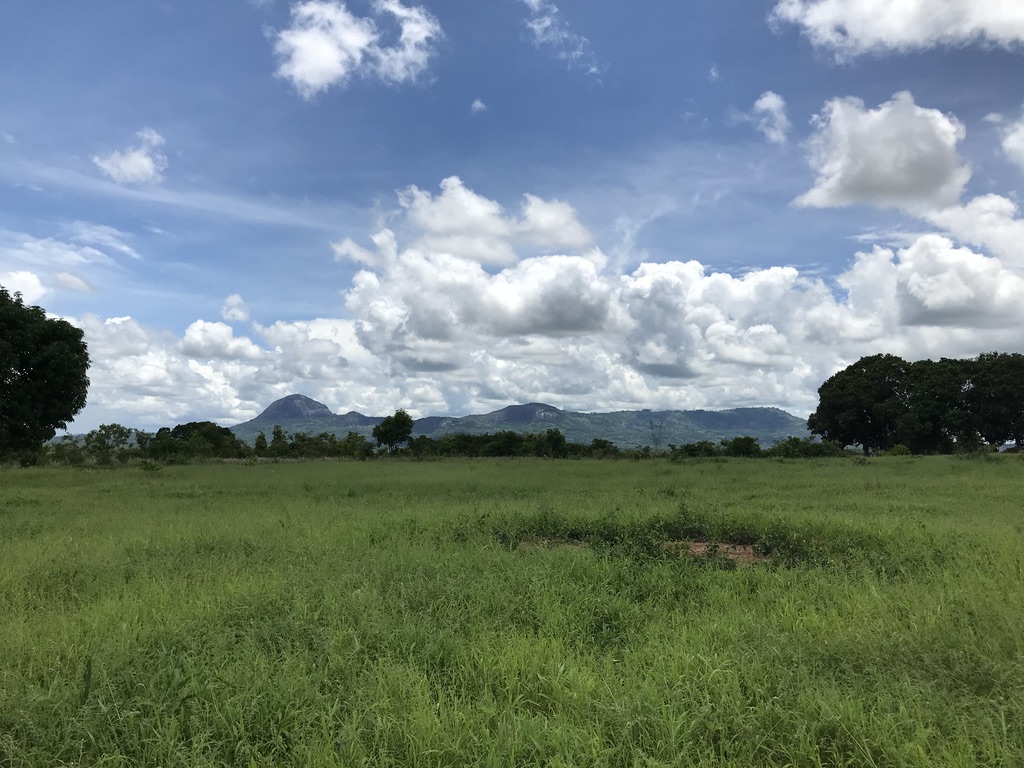
The little range of mountains out back behind the high school

Covid-19 Relief Work

Covid-19 Relief Work

Hey everybody! I’m still back in the states. I’ve been getting a lot of questions about how life back in the US is and what the future holds, so I’ve linked to an FAQ up top that y’all can check out to get a bit of an update.

So less than a week after I left, Mozambique had its first confirmed case of Covid-19, and since then the virus has slowly started spreading around the country. While it still has yet to reach Zambezia, where I was living (or at least there are no confirmed cases in the province), there is no doubt that it will arrive, and barring some miracle, it’s going to have some really devastating consequences. Due to the lack of medical infrastructure, the high immunocompromised HIV+ population, and the lack of privilege to make behavioral adjustments we’re fortunate to be able to make here in the US, puts them at an incredibly high risk for the disease. Because of that, my friend Tony da Luz and I have started a go-fund-me to work with local authorities to help provide personal masks and to implement other mitigating measures in our small town. There’s a couple videos on the page that will give you more information about the project, and I’ve linked the website both at the top of the post in the white button, and below at the bottom of the page, so check it out. Please consider donating, if not to help some people near and dear to my heart get the medical supplies they need, then to get a thank you capulana face mask made by yours truly. Thank you so much for your generosity.

Go-Fund-Me link: gf.me/u/xzgj6a

Peace Corps Evacuee FAQ

  1. Are you going back?
    I don’t know
  2. What’s your plan for the future?
    I don’t know
  3. Is Peace Corps Mozambique going to open up again?
    I don’t know
  4. How long will it take for you to hear back from Peace Corps about reinstatement?
    I don’t know
  5. If they offered you a job in another country, would you take it?
    I don’t know
  6. What happened to your stuff after you left?
    I don’t know
  7. Are you going to keep living with your parents for a while or are you going to move out?
    I don’t know
  8. Are you going to figure any of this out before you go crazy?
    I don’t know

I Actually Don’t Have a Job

I Actually Don’t Have a Job

It makes me really sad to be posting this, but at least for the next couple months, I, along with every Peace Corps Volunteer internationally, have been evacuated back home. If you want the full reasoning and everything I’ve put a link down at the bottom of this post to Peace Corps Director Jody Olsen’s open letter on the subject. The short story version of this though, is that in general, it’s important for volunteer’s health and safety to be able to leave their country of service, and as covid-19 has gotten worse in recent days, international travel has become less and less feasible. It’s uncertain how long this will last, so it’s possible that they’ll offer reinstatement in the coming months, if the global situation improves, and if unrelated existing visa problems get resolved, but it’s definitely far from certain that that will happen.

It’s hard to express how I feel right now, I’m not even sure myself how I feel, but it’s a mix of gratitude for my community and how welcoming they were, sadness for leaving friends, both American and Mozambican, and anger that I couldn’t have said a proper goodbye to the people that made my town into my home, but more than anything I feel just a sense of quiet, like a lack of closure. Suddenly uprooting all the relationships without any warning kinda feels like somebody just changed the channel from your favorite TV show to C-SPAN. Like you were getting to know the characters, you were getting invested in the plot, you had some popcorn popping in the microwave, but then without warning, the channel switches to boring, plotless TV you never asked for. 

Hopefully this isn’t it for this blog, if for no other reason than the fact that I still have a lot of music for the Mozambican Music Corner, but for now I’m home, I’m safe and quarantining, and I’m among family. So at least even if the channel’s stuck on C-SPAN, I have good company to share the popcorn with (I hope I didn’t stretch that metaphor too far).

https://www.peacecorps.gov/news/library/peace-corps-announces-suspension-volunteer-activities-evacuations-due-covid-19/

I Actually Have a Job

I Actually Have a Job

I know it’s hard to believe, but in between my days I spend having fashion shows with my neighbors, and the ones I spend traveling all day just to get to a big city so I can taste a nice cheesy, greasy slice of pizza (literally typing this makes my mouth water, I miss cheese so much) I’ve got a job doing real people work (take that lazy millennial stereotype), teaching physics at the high school here, mostly teaching eighth graders, but also a little bit of eleventh. And if I’ve learned anything from the past few weeks, it’s that all my old high school teachers deserve a lot more respect than they get (idk if any of y’all are reading this, love you guys), cus this shiz ain’t easy.

To walk through a typical day-in-the-life, I usually get up at 5:30 to make it to school starting at 7:00. There all the students sing the national anthem at 6:45, with backs straight and hands by their sides, but it’s not expected for us to be there, and the anthem is long. So unnecessarily long, I don’t understand. There’s a refrain that they sing twice between any two verses, meaning you sing the same four lines six times. The whole thing’s like 5 minutes, but it feel like a literal lifetime, and I guarantee if I write “Na memoria de África e do mundo” in here, any Moz volunteers reading this will curse me for getting the thing stuck in their head (haha, suckers). 

Also though, if any government officials are reading this, your anthem is a masterpiece, and your country’s beautiful. Please don’t deport me.

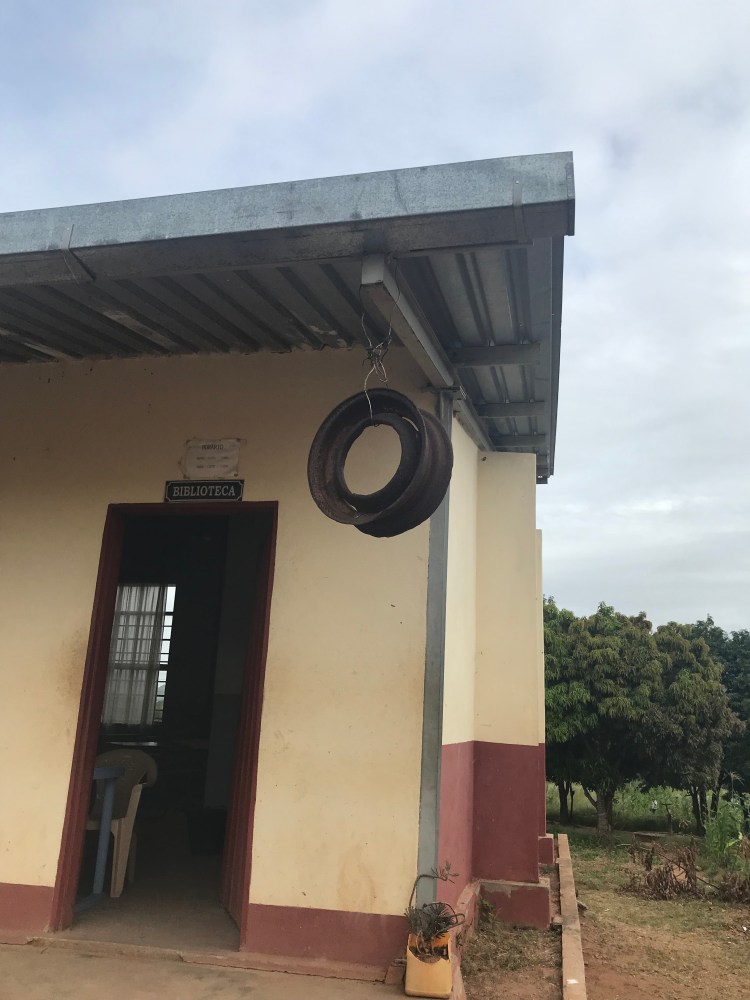
Either way, I roll up right after that to hear the morning bell, which is probably my favorite part about this place. Somebody just took an old rusty car wheel, tied it up from a rafter with some loose wire, and then they bang it with a piece of rebar at the beginning and end of every period. People always talk about German ingenuity and how smart they are for making good cars, but I think Mozambican ingenuity to look at the same car wheel and say “I could hit that with a stick and it’d make a lot of noise” deserves a bit of credit too.

The school bell

Another thing I think is so funny that Mozambique does, is that teachers are generally expected to wear batas, or lab coats, to make them feel distinguished I assume. So for the first couple of weeks, I felt kinda like a proper mad scientist, walking down the covered walkway with a billowing lab coat, chalk stains on my hands, probably some charcoal stains too I forgot to wipe off from cooking, speaking in a funny accent, probably looking super disheveled since I don’t have a mirror in my house and haven’t looked at my face in weeks. As time went on though, I realized I was one of maybe three teachers who actually used their batas. We’re in the middle of nowhere, so I get the sense teachers here think batas are more of a high-falootin, big city, southerner thing for the fancy pants down in Maputo to use. Also it’s way too hot for that. Bata or no bata, when the bell rings, since in Mozambique teachers move from room to room instead of students like in America, I stroll down the walkway to the next classroom, and all the students who were running around and making noise outside see you and get this super scared look on their faces since they know they’re meant to be in the classroom before I arrive, so they wrangle their friends and sprint to class to squeeze in before you walk in the door. From there there’s a really weird back and forth where you say (in Portuguese of course) “Good morning”, and they respond “Good morning Mr. Teacher”, “How’re y’all”, “We’re doing well, thanks be to God.” Which is a normal Mozambican response to that question, it’s not a super big deal what they’re saying, it’s more just weird having 40 kids shouting their emotional wellbeing at you in unison at 7 AM. 

Another big difference between the American system of education, and the Mozambican system, is that in the US, you’re expected as a student to focus on 6 or 7 classes at once, and in order to cover everything, especially in science, you might end up, doing biology one year, chemistry another, and physics another, instead of taking them all at once. Here’s really different though, instead, they’re taking 12 or 14 or so courses a year, and every student just takes a small bitesize bit of Physics and Geography and English and everything else each year, for at least 8th through 10th grades, until 11th where they are meant to pick a track they want to pursue, be it sciences, arts, or humanities. In some ways that’s better. It gives students who drop out (and a lot of kids drop out) a well-rounded, albeit shallow, education in the years they do study. It also gives students a better idea of what subjects are like before picking a track later on in school, which is especially important here, since education has to be much more career driven than in the states, since an extremely small percentage of these students will go on to higher-education. The problem is it makes my job so much harder. Eighth grade kids don’t exactly have great memories, and only teaching students twice a week for 45 minutes gives them so little chance for retention. This system also means I’m competing with 13 or so other teachers for their time outside of school, and their energy in school. I probably get about 20% participation in homework, and the last quiz I gave I saw between 11 and 30 percent pass-rates for my students, and it was such an easy quiz. From what I hear though, that’s super normal here in Mozambique, even with local teachers speaking fluent Mozambican Portuguese, which is really disconcerting. The children here just don’t place a priority on high school education. Most know they’re going to work on farms after school, so except for their agriculture class, school here is seen as a bit of a waste of time, especially for parents who could otherwise be putting their children to work. This is even more the case since before 2013, my town didn’t have a secondary school, so students either went to one of the towns an hour away by car, or, much more likely, they stayed in town and worked, so since the school’s so new, any economic payoff a high school brings to a community hasn’t been felt by my town yet. 

My favorite part about this picture is the kid staring at me like “Why is this guy taking a picture?”

This turned into a bit of a downer post really fast, so here’s some good news, I’m getting the hang of it. It’s not easy teaching kids in this environment, but I’m starting to realize what sorts of things the children here respond to, they’re starting to understand my funny Portuguese accent, and the summer break slump is starting to wear off. I can’t imagine all 200-odd students of mine are going to end up winning Nobel Prizes in Physics, but there are at least few students in each class who are engaged and participate and make my life a lot easier, and one thing teaching teaches you real quick is to pick your battles. Some of my kids will drop out, some are going to fail, and a lot of them won’t care that it happened, but as they say here: Fazer o que? What can you do? Being proud of the kids that are getting it is all you can really ask for as a teacher. 

What to Wear in Mozambique

What to Wear in Mozambique

I wanted to write a little bit here about teaching by about now, because classes just started two weeks ago, but Mozambique has taught me once again that assuming things are going to go the same way as they do in America is always a bad bet to make. Classes officially started a couple weeks ago, on Tuesday the 4th, but students were still registering, and teachers were still trickling in from their vacations, so when I showed up at 7 for my first class absolutely nobody was there, no administrators, no students, nobody. Later that day the school directors showed up, but only to sign kids up for classes. I tried to go to a later class, but the classroom door was locked, so I just called it a day and went home. And that’s about how the first week went. Even still after the second week is ending, there’s still a sense that classes are about to start for real in a couple of weeks, but for now it’s too early to do any real teaching. A girl that lives next door to came up to me just the other day and was excited to tell me that I was her physics teacher, and I was so confused because at that point I’d already taught her class twice and she wasn’t there. So I’ll probably post about school at some point, but I think I’ll take a page out of the Mozambican way to do these things and put that off a few more weeks. 

So instead of a school post I thought I’d write a bit about one of the most fun aspects of Mozambican culture to explore into as a foreigner, their clothing. Strolling through the little pop-up market that comes to town every Saturday, between the booths selling salty dry fish and straw mats, easily the most eye catching little reed stalls are the ones selling distinctive local fabrics called capulanas. Capulanas are a kind of waxy fabric that’s a bit stiffer than cotton that is used for just about everything. Usually they have bright colors and really fun patterns, but also I’ve seen capulanas with funny designs like a big picture of the president Felipe Nyusi or the pope, political logos, maps of the country, elephants, and peacocks (I don’t think there are even peacocks in Mozambique, but hey, throw it on a fabric and I guarantee a Mozambican mãe will wear it).

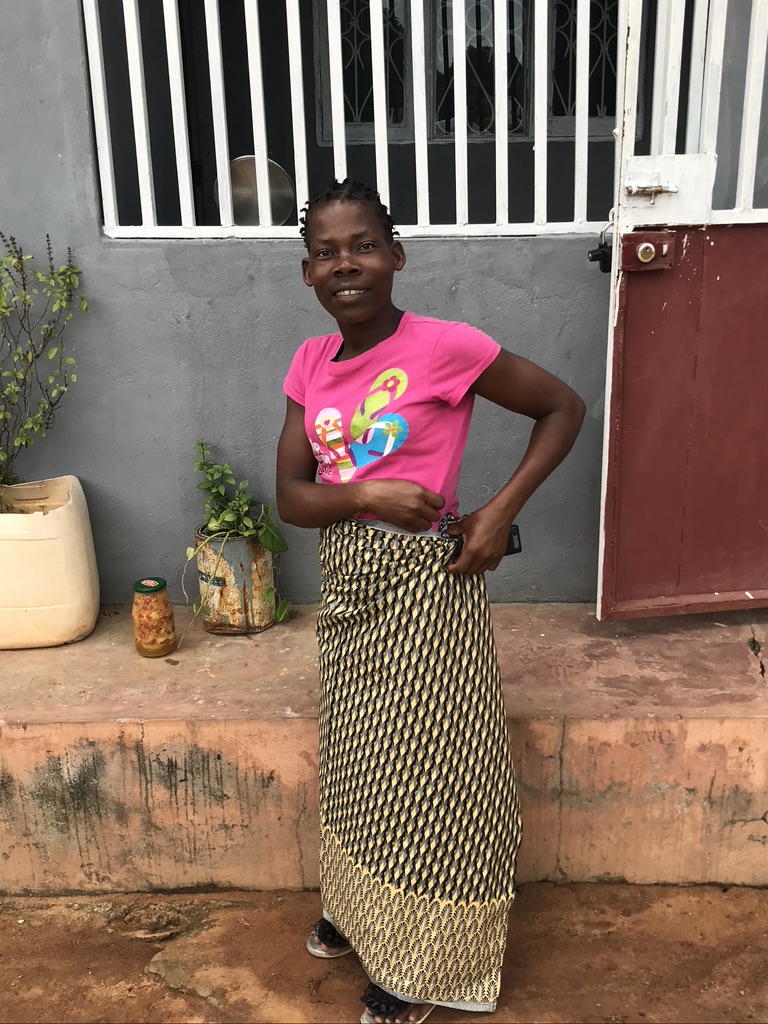
For women, probably the most common outfit is a t-shirt, and some sort of shorts or leggings, with a capulana tied over that. I asked my next door neighbor to help me show a little of what somebody would wear in Mozambique, so we both brought out our best capulanas and had a bit of a photo shoot. 

My friend Nadia showing off a capulana

Women can also throw a small capulana over their heads while your cooking as a little hair net, or if you’re carrying a baby, you can sling it around your back, over one shoulder, and under the other arm, kinda like if you mixed a baby bjorn and kavu bag, and cut the price of either by like 50 times. 

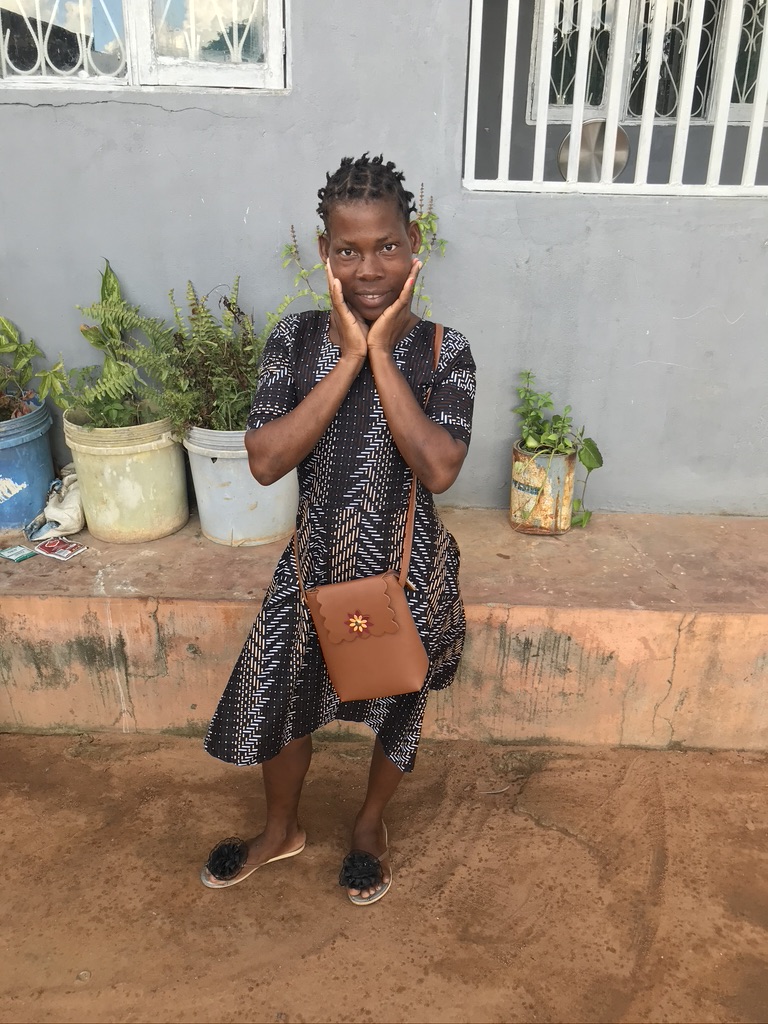
It’s also super common to get stuff tailored out of capulana. I’ve seen jackets, skirts, dresses, hats, backpacks, but I know especially volunteers have gotten really creative with their capulana fashion. I know a volunteer who got a bomber jacket, and I’ve heard of people asking modistas (tailors), to line their shoes in capulana. I even heard a volunteer managed to explain what a hammock was to a modista for slinging up in her house. You just have to know before you get anything tailored, that whenever you get something out of capulana, unless you search for the most boring capulana, nothing made out of the fabric will ever be very subtle. 

A capulana dress

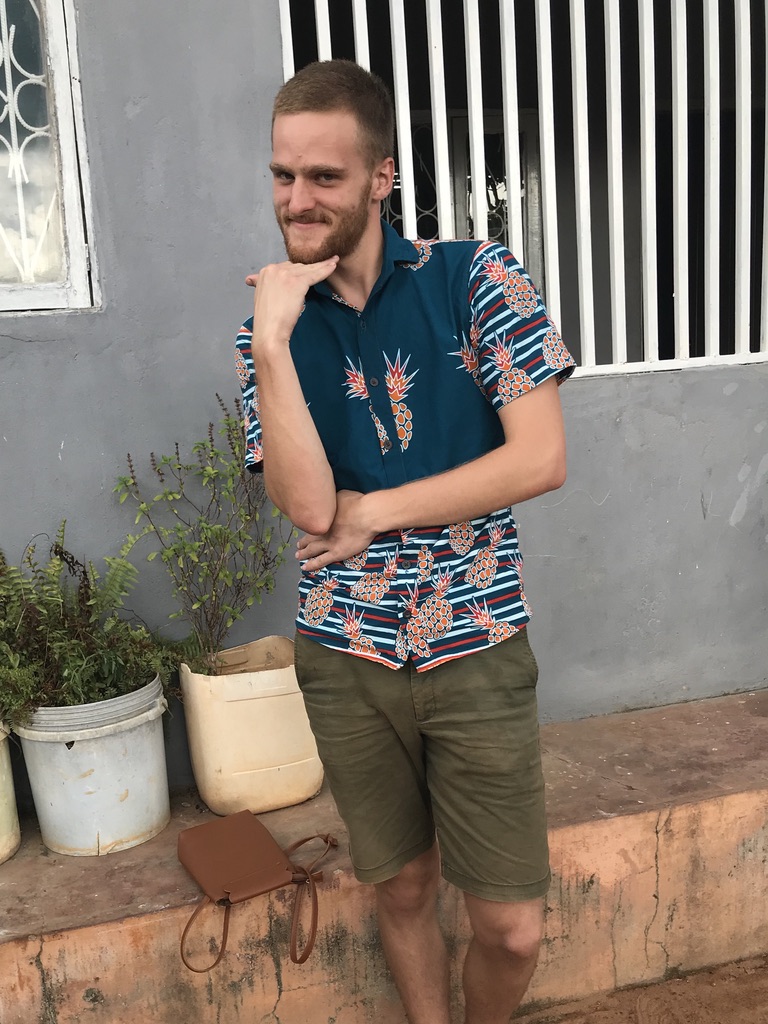
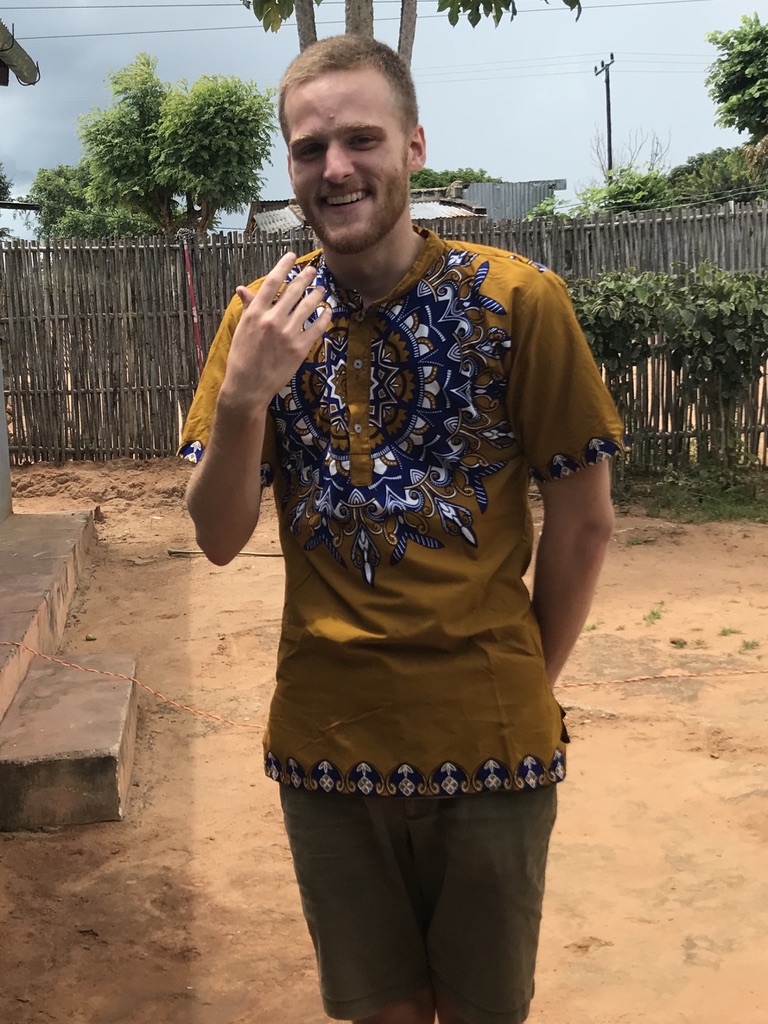
For men, there aren’t quite as many options, and it’s not quite as common to see men in capulana, but it definitely isn’t something exclusive to women, there’s just a bit of a culture of machismo here, so similar to back in the US, but probably to a little bit more so, it’s seen as somewhat feminine to care too much about what you’re wearing. Either way it’s not abnormal for a guy to throw on a capulana shirt, and there are a bunch of different styles. 

I was told to do this pose

The most common is the short sleeve button down (long sleeves take two fabrics so most capulana shirts are short sleeve to save money, also it’s damn hot). 

Just a lil camisa de capulana com gola chinesa

I’m a big fan of button ups or quarter buttons with a gola chinesa (it translates to chinese collar, but this is one of the words that they say here that sound 100% more racist when I translate it to English, so I’m gonna stick with gola chinesa).

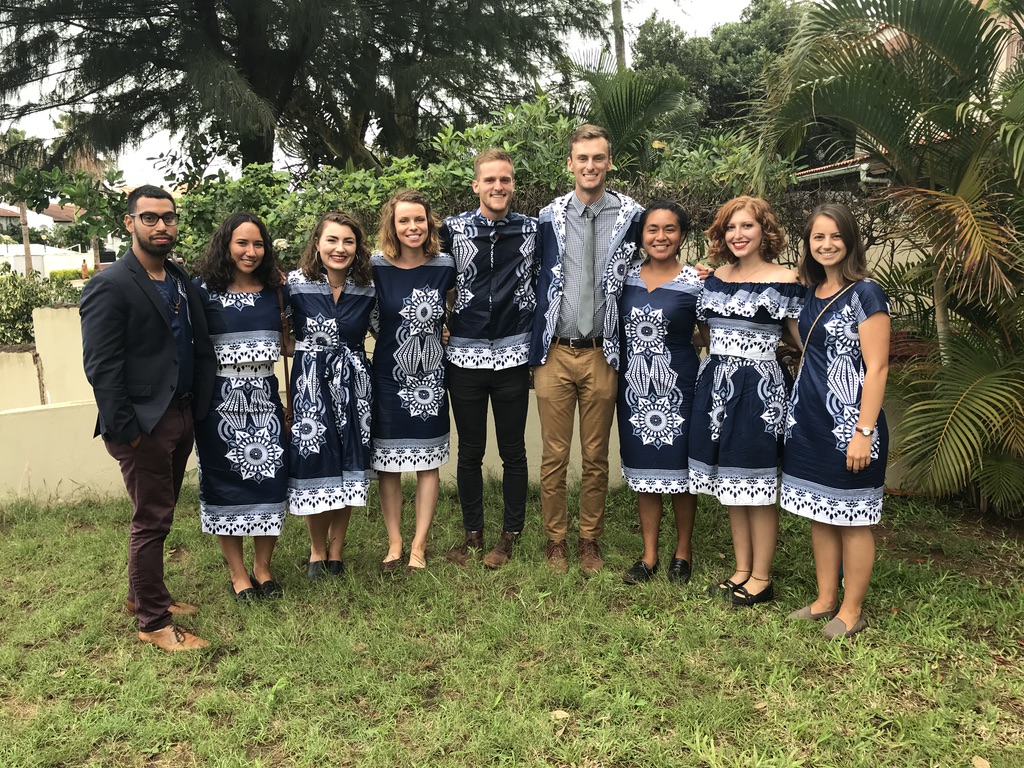
One of my favorite things about mozambican culture and their fashion is how during special events like marriages or graduations, it’s super common for a whole bunch of people, sometimes the whole neighborhood, or everybody at a ceremony, to all get matching capulanas. Even just as a gift it’s seen as a little bit more touching to give somebody a capulana and also buy yourself the same one, or to get two friends the same capulana. During our swearing in ceremony with the peace corps we tried to embrace that vibe and all 53 of us got the same capulana tailored up.

The crew in Zambézia in our swearing in capulana

While capulanas are super common, the most common way to get clothes here is by picking up what y’all back home just passed on at goodwill a few weeks ago. Donated clothing, after getting picked through in the US and Australia and such, gets shipped here and bought for pennies on the pound. It’s a lot cheaper than getting anything tailored, so it’s everywhere. US aid organizations often actually do that with clothes and food and a stuff like that, which is a bit of a double edged sword, cus cheap clothing is very needed, but economically it really stunts local growth into these sectors. Whatever the ethics of it are, it leads to some incredibly funny situations with people wearing clothing with English that they can’t understand. Maybe my favorite one I’ve seen is probably a lady who was just a little bit on the large side wearing a shirt that said “I’m extremely pregnant”. She wasn’t pregnant.

Travels and Tribulations

Travels and Tribulations

After getting to my little town almost a month ago exactly, work has been pretty scarce. With the exception of meeting the school director, the pedagogical director, and a few other important people around town, since classes don’t start until February 4th, and I won’t even know what grade I’ll be teaching until January 31st, it’s been a lot of time for me to spend however I wanted. Since most of the teachers are out of town on summer férias, that’s turned into a few random trips out of town for me. 

Just a few weeks ago the brother of one of the teachers in town knocked on my door saying one of his dogs was acting kinda funny and killed another of the dogs. He wanted me to take a picture of the dead puppy with my smartphone so he could show his brother (who is still out of town) what happened to the dogs. I probably should’ve been more cautious from the start, given everything he said, but I know this teacher has been a friend to volunteers before me, so I wanted to help however I could in such a sad situation. When I got there, the brother also asked me to take a picture of a bite mark on the back of the dog that was acting strange, and as I bent down to take the picture, the dog swung around and bit my leg. The bite mark itself wasn’t bad, not worth more than a little antibiotic ointment, but given the behavior of the dog, this won me the first two trips of my recent series of travels, up to sunny Nampula City, for post-exposure rabies shots. (I’d been vaccinated, but the rabies vaccine isn’t a cure-all, rabies is fast-acting and really damaging if left unattended, so despite getting vaccinated beforehand, I still needed post-exposure shots). 

There are three main ways to travel around Mozambique, machimbombo, chapa, and boleia; bus, minibus, and hitchhiking. On any of these trips I usually just go with whatever stops for me first (that I feel safe riding in), which for going up to Nampula meant getting a boleia. This is probably where my mom is getting worried reading this, but I promise you mom, boleias are the safest, cheapest, fastest way to travel in Mozambique. It’s even recommended by the Peace Corps, and they’re pretty uptight about what modes of transportation you can use. Volunteers have gotten administrative separation and sent home after riding on ‘open back’ chapas where you ride in a truck bed, or by catching a ride on a motorcycle, so it being recommended by Safety and Security actually means a lot. Unlike back in the states where hitchhiking isn’t something most people do, catching a boleia is super common and more formalized than in the US, and the hand signs are a little different. To flag down a driver, you hold your hand out and flap your fingers to the ground. I’ve also seen people point to the sky kinda elvis disco dance style to mean they’re going a long distance, but nobody really expects me to catch a boleia to travel within my town, so I usually stick to the floppy fingers.

Then as a driver you have your own set of hand signs you can throw. If you put a flat hand on top of a fist that means that your car is full.

And if you make a circle with your finger that means that you’re just staying in the area. I’ve also found that driving past somebody is a clear signal that you’re not picking them up. 

Despite the whole rabies thing, I really enjoyed the couple trips it afforded me. Nampula’s a fantastic city. It’s the second largest in Mozambique, after the capital, Maputo. It’s not that far from me so it’s also nestled among my little mountains, which I’m always happy to see out on the horizon. It has a really gorgeous catholic church in the middle of town, and it’s very active, with lots of hustle and bustle. But in all honesty it’s so nice mainly just because it’s a city. It has cafes and grocery stores, and Peace Corps has an office there with a lounge and comfy couches and wifi. As much as I’d love to show you pictures of the city, besides the picture I used as the header, looking back at my photos on my phone they’re mostly just pictures of pizzas, coffee, and hamburgers. I’d never think little capitalist delights like a grocery store with rows of packaged, processed food would make me feel so at home, but I felt like I did when my parents took me to the dollar store as a kid, staring wide eyed at all isles and isles of things you could buy.

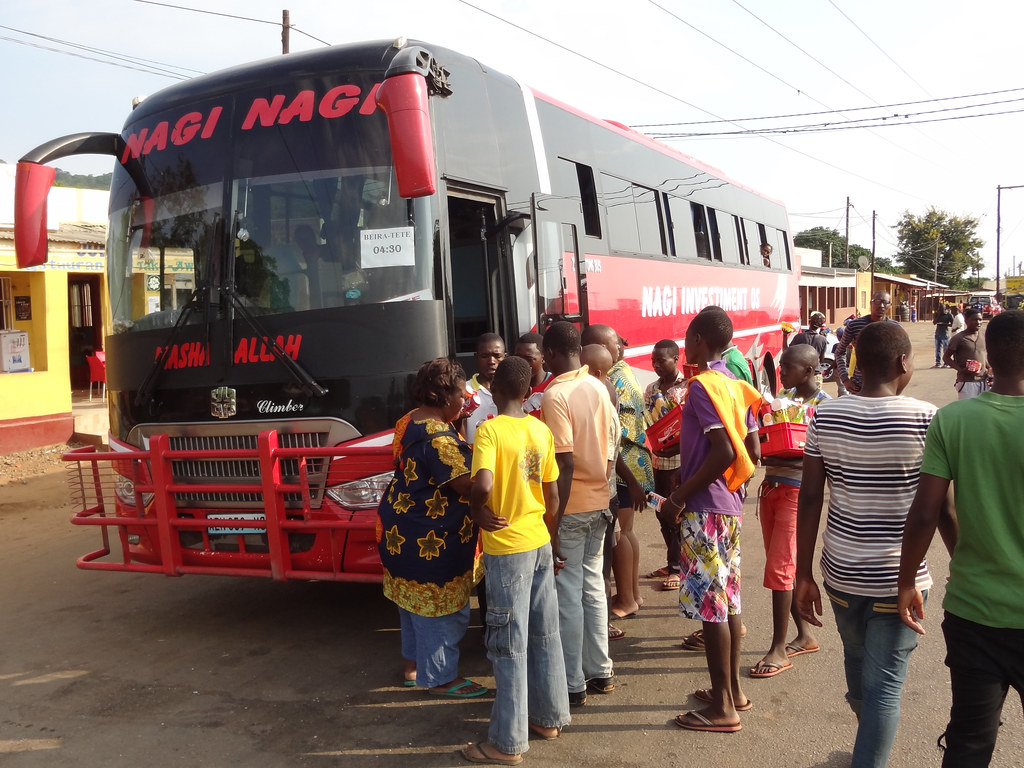
A big mozambican machimbombo PC : flickr.com

After the Nampula excursions, a few volunteers from Zambézia decided to meet up in Quilemane, a smaller city down in the southern tip of the province right by the coast. For a trip that long we decided to opt for a big machimbombo. They’re comfortable if you can get a seat and much more reliable with timing (though we’re talking relatively here, we’re still in Mozambique). Sadly all the seats were taken by the time the bus made it down to my town, so I was sitting in the isle for the trip, but it wasn’t so bad. Quilemane, similarly to Nampula, was a very cool city, but mostly my friends and I sat around coffee shops or restaurants playing cards and trading stories about our sites. Peace Corps is hard. You get lots of unwanted attention at site (especially if you’re a female volunteer) and anonymity is something you have to leave behind in America. Speaking Portuguese 24/7 is draining, making it especially hard when Mozambican culture is much more extroverted than you’re accustomed to, and there’s an expectation for you to be socializing and spending time with people, and staying in your house alone is seen as incredibly weird, if not rude. Having the opportunity to take a weekend off with some other volunteers, being able to talk about those things and have people who are in the same boat there to listen was super nice, and worth sitting on the floor of a bus for a few hours.

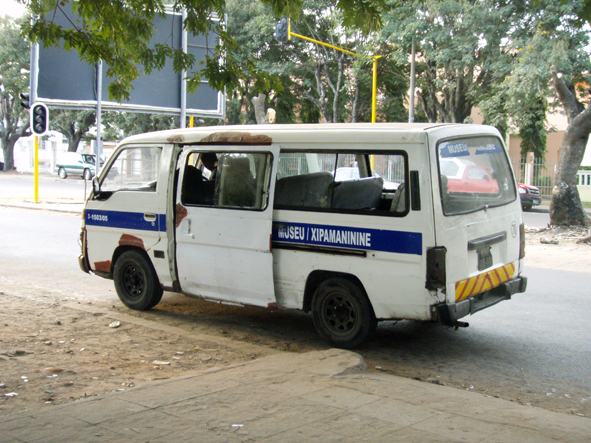
Mozambican chapa PC: olamoczmbique.wordpress.com

Lastly, just earlier this week I went to the nearest town with a population of more than just a couple thousand to buy some wood and construction supplies to make shelves so I don’t have to keep living out of my suitcase. The town wasn’t much to write home about besides a nice lunch with a couple volunteers that live there. On the way back though, I took the slowest, least comfortable, but most readily available way of getting around here in Mozambique, a chapa. In a chapa, all of the luggage bigger than a backpack (aka my big planks of wood) go strapped on top, and all the passengers get squeezed in the back. Every chapa I’ve been in has a wood plank drilled in right behind the driver in that serves as a sad excuse for a bench, and either by bad luck or cruel divine intervention, that always seems to be where I end up. Chapa drivers, to get as much money out of the ride as possible, will refuse to leave until they’ve stuffed as many sardines in their tin can of a car as they possibly can, making for some cramped legs and poor butt circulation. I’ve heard of times where chapas will wait hours for the last few passengers to roll around, or of cases when the other riders will pool together and buy the last few seats just so the driver will leave. It’s really no fun, but it gets you from A to B, and they’re strap stuff to the roof for ya, which is more than you can ask from a boliea.

Design a site like this with WordPress.com
Get started